Best SOC 2 Compliance Automation Platforms 2026: Vanta vs Drata vs Secureframe vs Sprinto
An un-biased architectural comparison of the top SOC 2 compliance automation tools in 2026. Evaluate Vanta, Drata, Secureframe, and Sprinto by hidden costs, API depth, regional support, and AI-native edge cases.
This guide compares compliance automation platforms by buyer fit, public positioning, common use case, implementation burden, audit workflow, pricing risk, integration depth, regional buying factors, and multi-framework scalability. It is not a paid placement ranking and does not claim hands-on product testing.
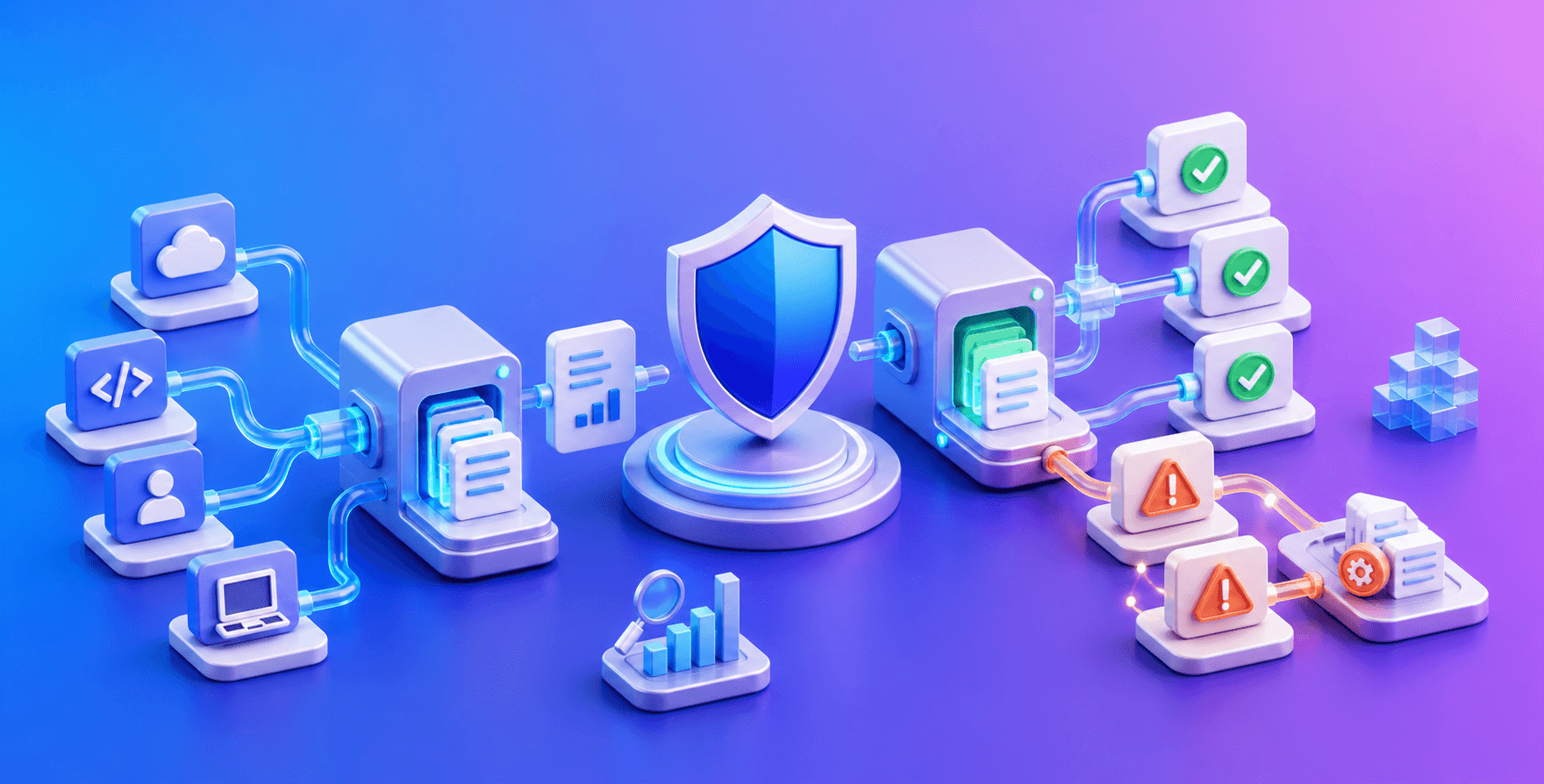
Selecting the right compliance engine requires mapping your existing tech architecture against your customer's procurement demands. The primary players—Vanta, Drata, Secureframe, Sprinto, Thoropass, Scytale, Scrut, Hyperproof, Comp AI, Delve, Oneleet, ISMS.online, Risk Ledger, Onspring, and Archer—solve fundamentally distinct aspects of the automated security compliance lifecycle.
This independent analysis isolates platform behaviors for scaling SaaS teams across the US, APAC, and EMEA regions where SOC 2 Type II, ISO 27001 certification, third-party vendor risk management (TPRM), and continuous monitoring frameworks dictate deal velocities.
Build and Filter Your Unbiased Vendor Shortlist
Map your specific company headcount, current database infrastructure, target timeline, and active API integrations to isolate the optimal compliance automation vendor.
Best Platforms by Strategic Scenario
Rather than relying on a generic best-to-worst chart, evaluate platforms based on your team's structural bottlenecks and engineering bandwidth.
| Operational Focus | Top Platform Shortlist | Critical Validation Checklist Before Signing |
|---|---|---|
| Rapid First-Time Readiness | Vanta, Secureframe, Sprinto, Comp AI, Delve | Verify data export capabilities, historical log parsing limits, and contractual definition of "audit-ready." |
| Optimized TCO & ROI | Sprinto, Vanta, Drata, Secureframe, Comp AI, Oneleet | Unbundle software fees from CPA firm partner costs, external pen-testing line items, and multi-framework renewal caps. |
| Enterprise Scalability | Drata, Hyperproof, Scrut, Onspring, Archer, Secureframe | Confirm structural control ownership, cross-workspace isolation, exception logging workflows, and custom API support. |
| White-Glove Implementation | Secureframe, Thoropass, Scytale, Oneleet, Sprinto | Audit exact remediation ownership, verify if human auditor hours are bundled, and document cross-team accountability. |
| Trust Centers & Portal Monetization | Vanta, Secureframe, Drata, Hyperproof, Risk Ledger | Assess automated questionnaire ingestion, NDA click-wrap integrations, and live downstream monitoring sync. |
| ISO 27001 / ISMS-First Core | Drata, Secureframe, ISMS.online, Sprinto, Scrut, Hyperproof | Evaluate native Statement of Applicability (SoA) editors, internal risk matrices, and certification-body compatibility. |
Direct Segmentation: Platform Fit by Engineering & Ops Profiles
An organization's operational DNA should dictate tool selection. The chart below matches system architecture profiles with their high-affinity platforms:
- Engineering-Led Teams (Custom AWS/GCP, Kubernetes, Complex CI/CD): Drata or Hyperproof. These teams require granular custom control testing, programmatic API webhooks, and explicit programmatic proof rather than high-level policy templates.
- Rapid-Growth Commercial SaaS (Standard Cloud Stacks, Fast Enterprise Pilots): Vanta or Secureframe. Optimized for out-of-the-box native integrations across standard IDPs, HRIS platforms, code repositories, and common ticketing architectures.
- Lean, Agile Startups (Bootstrap Budgets, Immediate Compliance Triggers): Sprinto, Comp AI, or Delve. Designed to minimize setup friction using highly prescriptive control frameworks and low-touch automated collection patterns.
What Modern Security Automation Engines Actually Solve
To maximize your compliance ROI, your executive team must understand the boundaries between automated cloud monitoring and human remediation requirements.
[Cloud Infrastructure APIs] ──> [Compliance Platform Dashboard] ──> [Independent Auditor Portal]
(Continuous Checking)           (Evidence Accumulation)            (Report Verification)
The Automated Layer
- Continuous Evidence Collection: Programmatic queries checking multi-factor authentication (MFA) enforcement across GitHub, Google Workspace, and AWS/Azure.
- Policy Attestation Workflows: Distribution, automated tracking, and renewal enforcement of security playbooks across expanding internal personnel.
- Infrastructure Snapshot Ingestion: Programmatic capture of database backup logs, identity lifecycle configurations, and encryption-at-rest validation proof.
The Human Operational Burden
- Control Failures Remediation: An automation platform can flag a rogue unencrypted laptop or a missing MFA setting, but internal IT or devops must physically close the gap.
- Access Management Reviews: Routine manual validation of user permissions across highly critical production databases.
- Independent Fieldwork Coordination: Explaining unique operational anomalies directly to your assigned licensed CPA firm during testing intervals.
Detailed Competitor Architectural Matrix
This structural comparison focuses on deployment risk profiles, renewal expansion paths, and API limitations across the 2026 compliance landscape.
| Platform Core | Core Specialization | Operational Watch-Outs & Risks | Structural API Strengths |
|---|---|---|---|
| Vanta | Market-leading automated continuous evidence gathering; exceptional Trust Center and questionnaire automation workflows. | Watch for unexpected renewal increases on add-on modules and custom-control processing scale limits. | Deep out-of-the-box catalog covering standard B2B developer toolchains. |
| Drata | Robust, enterprise-grade control management and deep multi-cloud infrastructure configuration visibility. | Steeper initial onboarding configuration loop and administrative overhead for very small development pods. | Programmatic infrastructure mapping, ideal for custom control logic. |
| Secureframe | Strongly structured, guided compliance processes backed by hybrid software and comprehensive in-house compliance support services. | Implementation velocity can feel heavy; additional framework additions often carry separate service premiums. | Highly structured multi-cloud policy and permission tracking. |
| Sprinto | Highly prescriptive, low-touch asset monitoring frameworks tailored for rapid seed-to-growth transitions. | Ensure integration depth matches highly customized multi-cloud deployments; verify regional auditor networks. | Direct, highly focused alerting systems for standard operational tasks. |
| Thoropass | Hybrid closed-loop software bundle delivering unified readiness software alongside in-house audit delivery teams. | Bundling software and audit delivery under one contract can reduce flexibility if you shift external CPA partners. | Standardized internal platform tooling with uniform evidence templates. |
| Hyperproof | High-governance enterprise Risk and GRC management framework suited for running ongoing multi-framework routines. | Platform weight and implementation footprints are typically too advanced for early-stage single-audit operations. | Advanced custom cross-mapping workflows for parallel global standards. |
| Comp AI / Trycomp AI | AI-native compliance architecture focusing on open-source flexibility and rapid natural-language policy generation. | Validate downstream independent auditor comfort levels with non-standard evidence compilation workflows. | AI-driven continuous control parsing and automated log summarization. |
Hidden Pricing Risks & Integration Discovery Questions
Software line items are only one part of the equation. To protect against mid-contract budget creep, surface these core technical validation items during vendor demo loops:
1. The Vanta Integration & Expansion Check
- Pricing Risk Profile: Look closely at how downstream customer Trust Center interactions and vendor risk tracking licenses scale year-over-year.
- Key Engineering Question: "Are custom database architectures or non-standard code repositories handled natively via custom webhooks, or do they require manual evidence uploading workflows?"
2. The Drata Hierarchy & Workspace Check
- Pricing Risk Profile: Assess how pricing shifts as your team structures separate multi-cloud instances, isolated workspaces, or distinct global operating models.
- Key Engineering Question: "How does the system automate the cross-mapping of single pieces of evidence across concurrent SOC 2 Type II, ISO 27001, and HIPAA control criteria?"
3. The AI-Native Engine (Comp AI / Delve) Verification Loop
- Pricing Risk Profile: Confirm whether the software subscription covers real-time continuous monitoring infrastructure or operates solely as an AI-driven policy and evidence summarization interface.
- Key Engineering Question: "Can you demonstrate exactly how your platform presents unstructured log files to an independent external CPA auditor without breaking source file verification trails?"
Global Compliance Demands: Regional Framework Realities
| Buyer Headcount Region | Critical Framework Variations | Local Procurement Hurdles |
|---|---|---|
| United States Market | Primary emphasis centers tightly on immediate SOC 2 Type II production security validation. | High buyer familiarity with core platforms means automated Trust Centers are often required to accelerate enterprise vendor risk validation reviews. |
| APAC / Australia Region | Strong hybrid requirement matching SOC 2 structures with immediate ISO 27001 mappings and IRAP considerations. | Local teams must explicitly confirm APAC data residency patterns, regional timezone support availability, and familiarity with regional CPA firms. |
| EMEA / UK Market | ISO 27001 and formal GDPR/UK Data Protection Act mapping frequently take priority over standalone SOC 2 assets. | Procurement reviews analyze supplier security and downstream data privacy controls aggressively; prioritize platforms with mature native risk assessment registers. |
Strategic Demo Scripts: How to Test Platform Stress Tolerances
When attending software demos, pivot away from polished happy-path dashboards. Use these tactical scenarios to pressure-test the underlying system logic:
- The Disconnected Integration Flow: "Walk me through the platform's exact notification behavior when an active production AWS connection breaks mid-way through a 6-month SOC 2 Type II observation window. How are historical log gaps flagged?"
- The Auditor Exclusion Test: "Show us how an engineer isolates a temporary staging environment containing dummy data so that it doesn't trigger continuous control failure flags on our core production monitoring boards."
- The Migration Export Path: "If we choose to transition away from your ecosystem in Year 3, what exact format is used to extract our raw historical control histories, structured policy agreements, and past signed artifacts?"
Final Procurement Execution Path
To keep your security posture aligned with your commercial roadmap, execute your compliance strategy in these logical phases:
[Phase 1: Identify Key Deals] ──> [Phase 2: Use Cost Calculator] ──> [Phase 3: Run Vendor Demos]
(Scope Buyer Requirements)         (Isolate Complete Budgets)       (Test Platform Stress States)
- Verify Your Primary Buyer Requirement: Reach out to your pipeline's lead enterprise security reviewers to verify whether a SOC 2 Type I will unblock near-term pilots, or if they require an active 6-to-12 month SOC 2 Type II observation window.
- Model Your Total Budget Footprint: Leverage the SOC 2 Cost Calculator to properly align compliance platform software subscriptions with third-party penetration testing fees and internal engineering hour allocations.
- Audit the Auditor Path: Ensure your selected software platform communicates natively with your independent CPA firm's audit workflow before signing any software multi-year contracts.
Free SOC 2 tool
Not sure what to do next?
Use the soc 2 vendor comparison tool: rule-based vanta, drata, secureframe shortlist to get an instant result before booking vendor demos or audit calls.
Related Articles